Discovering and Protecting Mangrove Ecosystems
Discover Our MissionMangroves are plants of different types such as a tree, shrub, palm and even fern of diverse evolutionary origins, evolved with convergent adaptation to thrive in harsh intertidal environment between land and sea which is open to vagaries of both sea and land such as flood, storm, high salinity, draughts, shifting of sediments, tidal inundation and exposure. The community of mangroves is an ecological assemblage of plants rather than taxonomical or morphological grouping.
In other words, representative plants of different families have evolved the means to survive intertidal environment between land and sea and become a mangrove in the course of evolution. There are many plant families that are adopted to the intertidal environment, but only a few families are exclusive mangroves. This suggests that mangroves are not primitive, and they evolved in due course of time.
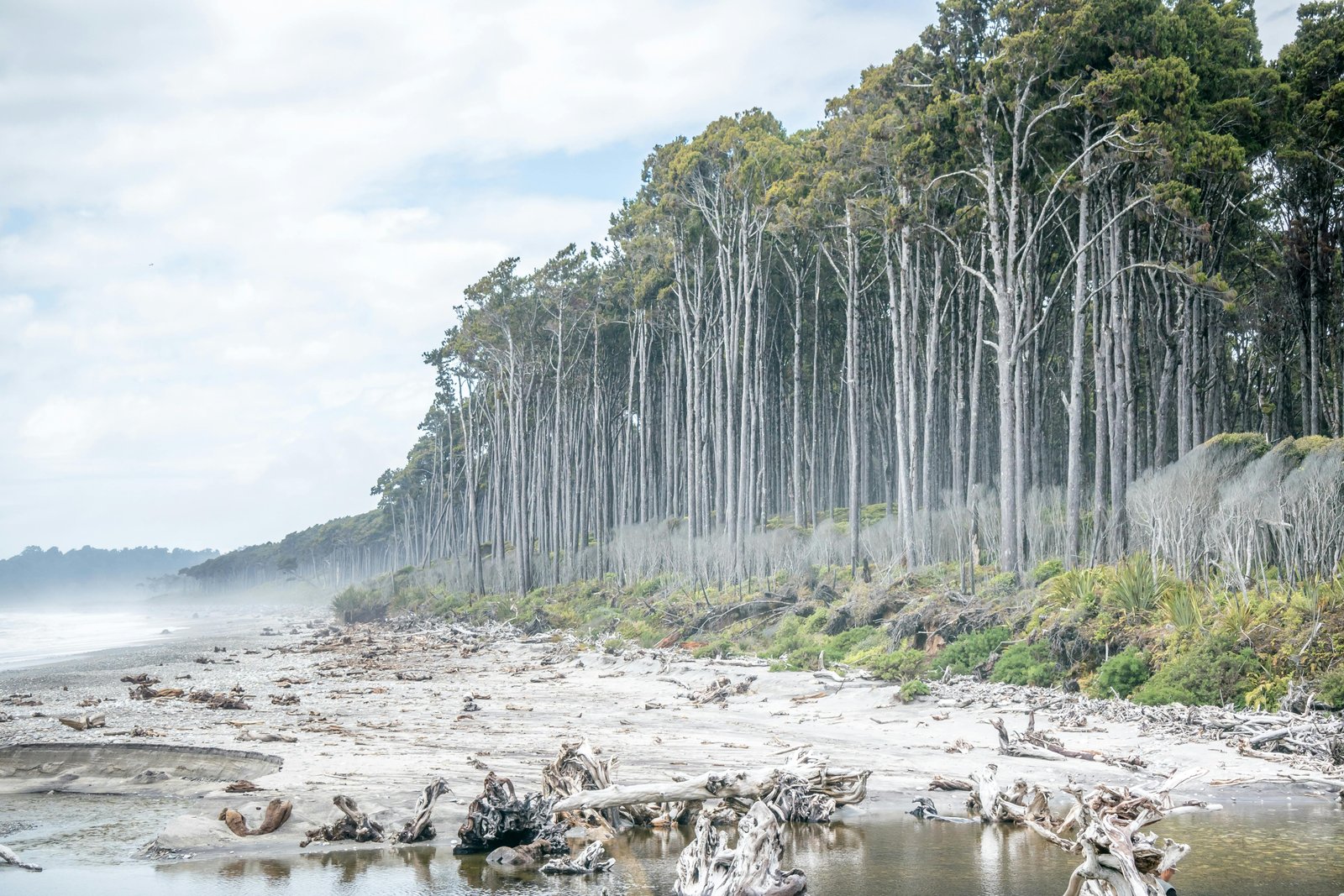
Mangroves are restricted to 30° North and 30° South latitude. However, the most northernly mangroves are located at 31°22.5' N near the town of Kiire of Japan in the northern hemisphere and most southerly mangroves are located at 38°45' S of Australia, where the mangroves exist below freezing point.
Generally, mangroves dominate on the coast and the river banks up to which the tidal water ingress during high tide in the tropical and sub-tropical regions. The distribution pattern of mangroves is the result of latitudinal limit; particularly sea surface temperature, air temperature and inland rainfall.
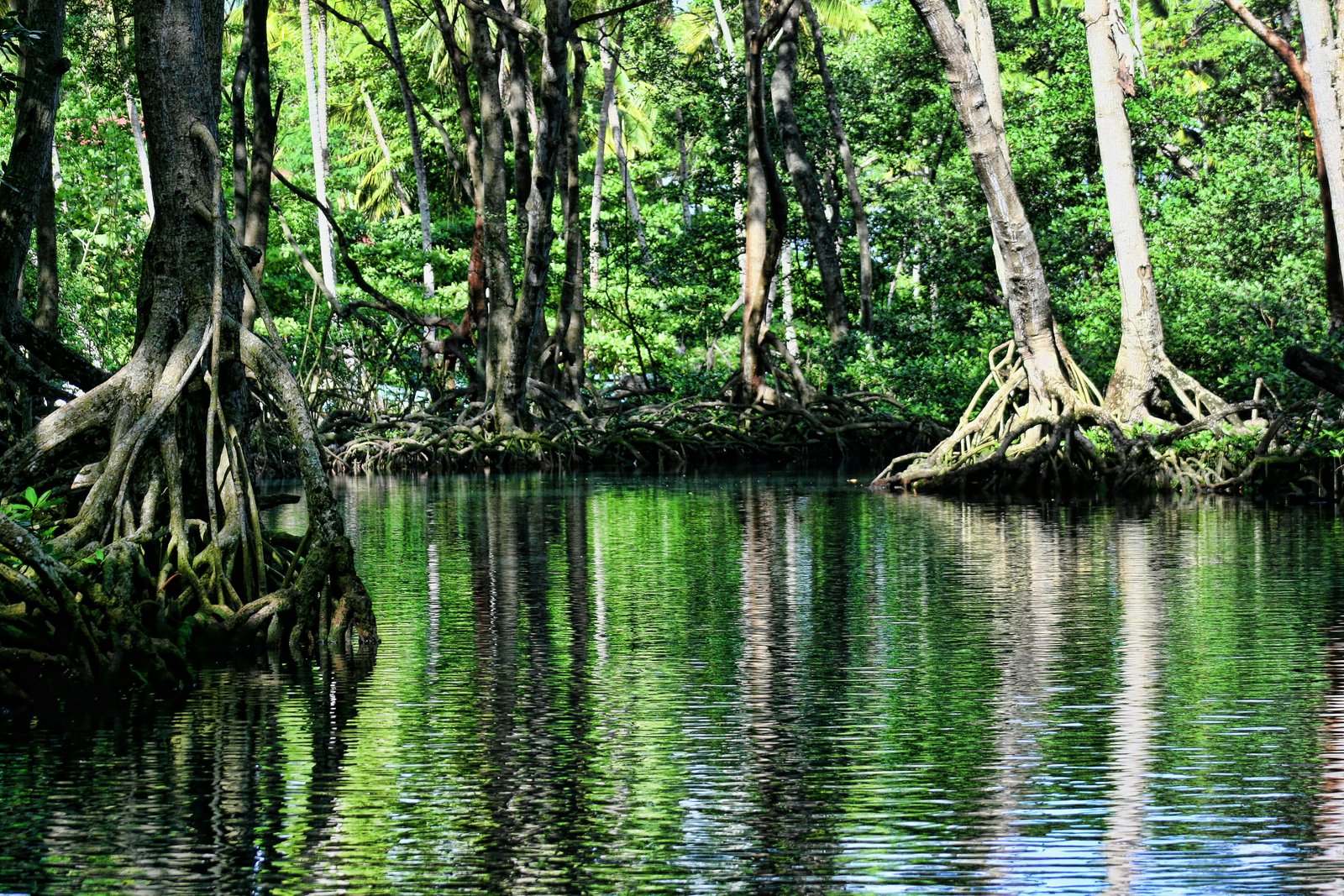
The total mangrove cover area of world is 152,361 sq. km (Giri et al., 2011). The mangrove cover has greatly decreased since the last century. Globally, it comprises less than 1% of tropical forest cover and 0.4% of total forest cover of world (FAO, 2006).Mostly mangroves are dominantly tropical forests and are found in the tropical region of South-east Asia, south Asia, North and Central America, South America, West and Central Africa and south Asia.Among them maximum area of mangroves is found in South-East Asia region over an area of 52,049 sq. km followed by South America region with 23,882 sq. km, North and Central America region with 22,402 sq. km and West and Central Africa region with 20,040 sq. km. The least mangrove cover is found in the Middle East with 624 sq. km.
In political perspective mangroves are found in 123 countries worldwide among which 12 countries comprise nearly two thirds of mangrove cover. Indonesia has maximum mangrove cover comprising 20.9 % of world total mangrove cover. Next to Indonesia, Brazil, Australia, Mexico, Nigeria, Malaysia, Myanmar, Bangladesh, Cuba, India, Papua New Guinea and Columbia have mangrove cover in descending order area wise
Figure 1.2: Global Mangrove Distribution by Region
| Country | Mangrove Area (sq.km) | Proportion of Global Total |
|---|---|---|
| Indonesia | 0 | 20.9% |
| Brazil | 0 | 8.6% |
| Australia | 0 | 6.5% |
| Mexico | 0 | 5.0% |
| Nigeria | 0 | 4.8% |
| Malaysia | 0 | 4.7% |
| Myanmar | 0 | 3.3% |
| Bangladesh | 0 | 3.2% |
| Cuba | 0 | 3.2% |
| India | 0 | 2.8% |
| Papua New Guinea | 0 | 2.8% |
| Colombia | 0 | 2.7% |
| Rest of countries | 0 | 22.5% |
Mangroves represent a large variety of plant families, which are adopted to tropical inter tidal environment. Although mangrove is considered as tropical ecosystem unlikely other tropical ecosystems the diversity of mangroves is very low.
Different researchers have classified mangroves in different classes. Saenger et al (1963) classified them into exclusive and non-exclusive mangroves (60 plants total). Tomlinson (1986) refined this into: 1. Major elements (True Mangroves), 2. Minor elements, and 3. Mangrove Associates.
Complete fidelity to the mangrove environment. Morphological specialization (aerial roots, vivipary) and physiological salt exclusion.
Inability to form a conspicuous element of the vegetation. Occupy peripheral habitats and rarely form pure communities.
May occur only in transitional vegetation, existing as epiphytes or in terrestrial boundaries.
Mangrove species distribution is not uniform worldwide. Maximum true mangrove species richness is found in South Asia, South-East Asia, Australia, New Zealand and Pacific Islands. Among the countries Indonesia has the maximum true mangrove species richness followed by Papua New Guinea, Philippines, Malaysia, Australia, India and Thailand.
Mangrove Species Richness by Country
The Mangrove cover in India is about 3.3% of worlds' mangrove area, spread over 4921 sq kms (0.14% of total geographic area). Sundarban of West Bengal accounts for more than 40% of India's mangrove cover.
State-wise Mangrove Cover Percentage (India)
The maritime state Odisha has a coast of 480 km. Mangrove exists on river estuaries (Mahanadi, Brahmani, Baitarani, Subarnarekha) guarding the hinterland against cyclones and tsunamis. Kendrapara district has the maximum area (197 sq km).
| District | Very Dense | Moderately | Open | Total |
|---|---|---|---|---|
| Baleswar | 0 | 1 | 4 | 5 |
| Bhadrak | 0 | 9 | 23 | 32 |
| Jagatsinghpur | 0 | 1 | 7 | 8 |
| Kendrapara | 82 | 83 | 32 | 197 |
| Puri | 0 | 0 | 1 | 1 |
| Total | 82 | 94 | 67 | 243 |
Odisha has the highest diversity in the Indian mainland (35 true species) compared to the Andaman and Nicobar Islands (38 species). During our study, we found Bhitarkanika has the maximum diversity followed by the Mahanadi delta.
Species Richness across Odisha Locations
Dive into our comprehensive botanical database featuring over 100 mangrove species and their associates.
Explore exclusive plant species evolved specifically for intertidal survival.
Launch ExplorerDiscover the diverse flora that thrive alongside the true mangrove ecosystem.
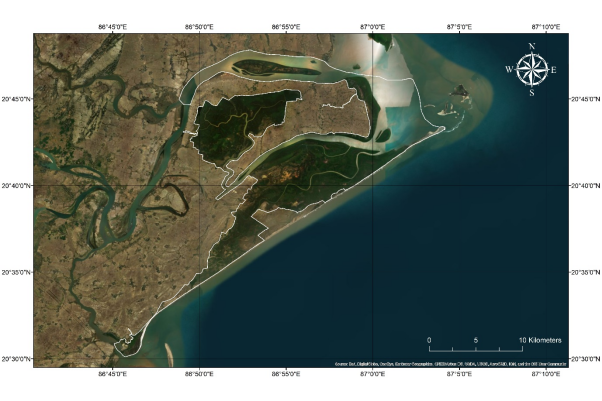
Launch ExplorerThe mangrove ecosystem of Bhitarkanika has been notified as Bhitarkanika Wildlife Sanctuary which covers an area of 672 km2. The sanctum sanctorum is designated as Bhitarkanika National Park with an area of 145 km2 of pristine mangroves.
Floral diversity includes a total of 302 plant species belonging to 80 families. Generally, the two-storey system is observed in this mangrove forests since the ground flora is very poor.
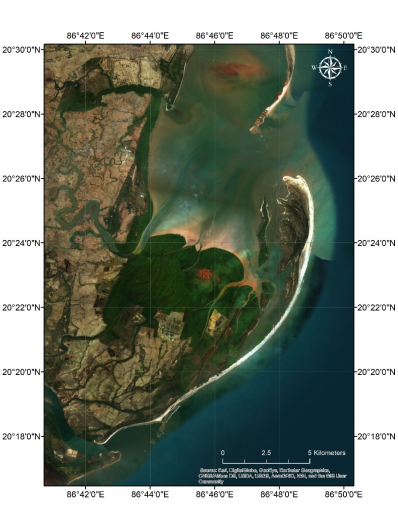
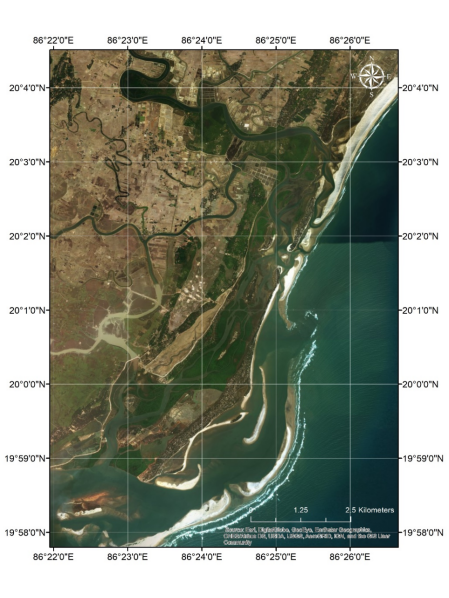
The Mahanadi delta is a species rich mangrove ecosystem of the country. Paradeep, Jambu, Batighar, Kharnasi and Hukitola offshore island have mangrove cover.
Total mangrove cover in Mahanadi delta is 45 km2 of which 27 km2 mangrove area is included in the buffer zone of Gahirmatha Marine Sanctuary. Twenty-nine true mangrove species and more than 30 mangrove associates have been reported.
In the Devi estuary, a good patch of mangrove forests is observed. The top canopy consists of A. officinalis, S. apetala, B. gymnorhyza, E. agallocha, K. candel and C. decandra, etc.
The second storey consists of shrubby elements like A. corniculatum, A. ilicifolius, Dalbergia spinosa, P. paludosa, T. troupii, H. tiliaceus, C. inerme, etc.
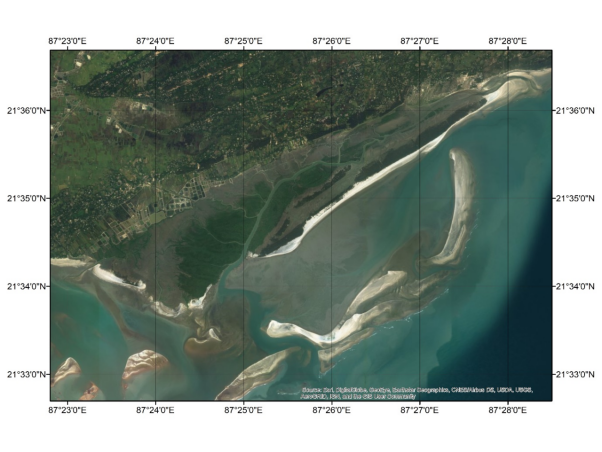
The Subarnarekha estuary is endowed with a few species of mangroves such as A. alba, A. officinalis, A. marina, A. corniculatum, E. agallocha, R. apiculata, R. mucronata, S. apetala and A. illicifolius etc.
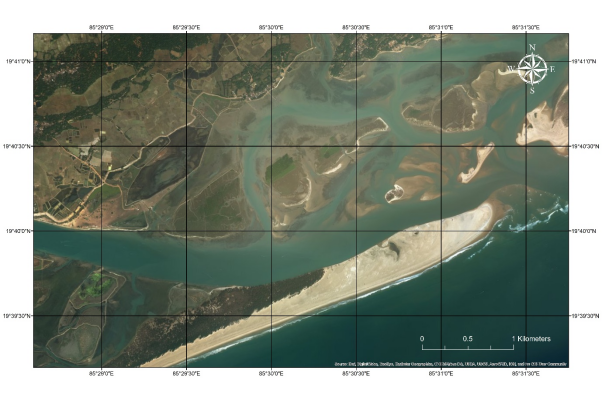
In the past, the margin of the Chilika lake and the undisturbed islands like Badokuda, Sanokuda, Ghantasila, etc. were endowed with the unique eco-system of mangroves.
Recently in past one decade, there efforts were taken to reintroduce by plantation of R. mucronata, R. apiculata, A. alba and A. marina in Chilika, particularly in the mouth region of outer channel.
Mangrove cover is decreasing by 1 to 2% per year worldwide. At least 35% of the area has been lost in the last two decades.
Around 40% of the human population resides within 100 km of the seacoast. Habitat conversion, pollutant loads, and deep-water ports significantly disrupt the delicate tidal regimes and salinity balance.
Shrimp farming alone has been responsible for 38% of mangrove loss. Between 1980 and 2005, agricultural expansion caused massive biodiversity loss in central and South America.
Direct use for wood, timber, and pulp accounts for 26% of current loss. At current rates, mangroves will be functionally extinct in less than a century without intervention.
Changing sea levels, storm frequency, and CO2 concentrations reshuffle species distribution. While resilient, mangroves often find no suitable site to migrate due to coastal squeeze.